
On small acts of generosity, reconnecting with our food, and why a handful of herbs can mean so much more than we realise.
There is something rather extraordinary about the impact of seemingly ordinary acts of kindness.
Sometimes they arrive without ceremony. No grand gestures, no expectations, and often without the person responsible ever knowing the difference they've made.
For me, one of those moments came in the form of a little herb garden growing along someone's front fence.
A Little Kindness, Many Years Ago
When I was younger, broke, and studying at university, I moved into a suburb I didn't know particularly well.
Like most students, money was tight. I was finding my feet, figuring out how to look after myself, and learning how to make the little I had stretch that bit further.
While exploring my new neighbourhood, I came across the home of a food blogger who had planted a small herb garden along their front fence.
It wasn't particularly elaborate. Just a few old concrete laundry tubs repurposed as planters, filled with herbs and tucked along the front fence.
A little sign encouraged passersby to take a sprig or two and visit the blogger's website for recipes and inspiration on how to use them.
It was such a simple idea. A few salvaged tubs, a handful of herbs, and an open invitation to share in something that someone else had grown.
There was no expectation of anything in return. Just a small act of generosity that made fresh food, a little knowledge, and the joy of cooking more accessible to anyone who happened to wander past.
But that little garden changed something for me.
It gave me a sense of belonging in a place that hadn't quite felt like home yet. It encouraged me to experiment with cooking, to think differently about the food I was eating, and to find enjoyment in making something from very little.
Looking back, I genuinely believe that small gesture probably saved my life in more ways than one.
And the person who planted it likely never knew.
I've carried that experience with me ever since.
Somewhere Along the Way, We Lost Our Connection to Food
There is something quite peculiar about the way we buy and consume food in our cities.
We can walk into a supermarket and purchase almost any herb imaginable, neatly bundled, wrapped in plastic and transported from somewhere else.
We might need a sprig of rosemary for dinner or a few leaves of mint for a drink, but instead we purchase an entire bunch, use what we need, and watch the remainder slowly wilt in the refrigerator.
It's expensive, unnecessarily wasteful, and so normalised that we rarely stop to question it.
At the same time, many of us have become increasingly disconnected from the simple experience of growing something edible.
We think of food production as something that happens elsewhere. On farms, in enormous greenhouses, or behind the scenes of the supermarkets we visit.
But growing food doesn't necessarily require acres of land, a sprawling backyard, or even a particularly green thumb.
A sunny windowsill, a balcony, a recycled container or a carefully designed indoor growing space can all become places of production.
No, a few planter boxes won't feed an entire neighbourhood.
But perhaps they can change the way we think about feeding ourselves.
And that's a pretty good place to start.
Reconsidering What Makes a Garden a Community Garden
Community gardens have the potential to be wonderful places.
They bring people together, encourage knowledge sharing, create opportunities to learn, and offer a connection to the natural world that can be difficult to find in increasingly urban environments.
But somewhere along the way, some community gardening models have become surprisingly inaccessible.
Membership fees, waiting lists, allocated plots and participation requirements can create barriers for the very people who might benefit most.
There are understandable reasons why some gardens operate this way, particularly when space and resources are limited. But I don't believe that should be the only model for community growing.
For me, a community garden should begin with a much simpler idea.
Take a little. Leave a little. Give what you can.
Perhaps you need a sprig of thyme for dinner.
Perhaps you've propagated far too much mint and would like to share it.
Perhaps you know absolutely nothing about growing plants but would love to learn.
Or perhaps you simply enjoy having a little greenery in your day.
All of those things should be enough to belong.
Community shouldn't be something you have to buy your way into.
Introducing the Little Botanical Garden at Bay Ten
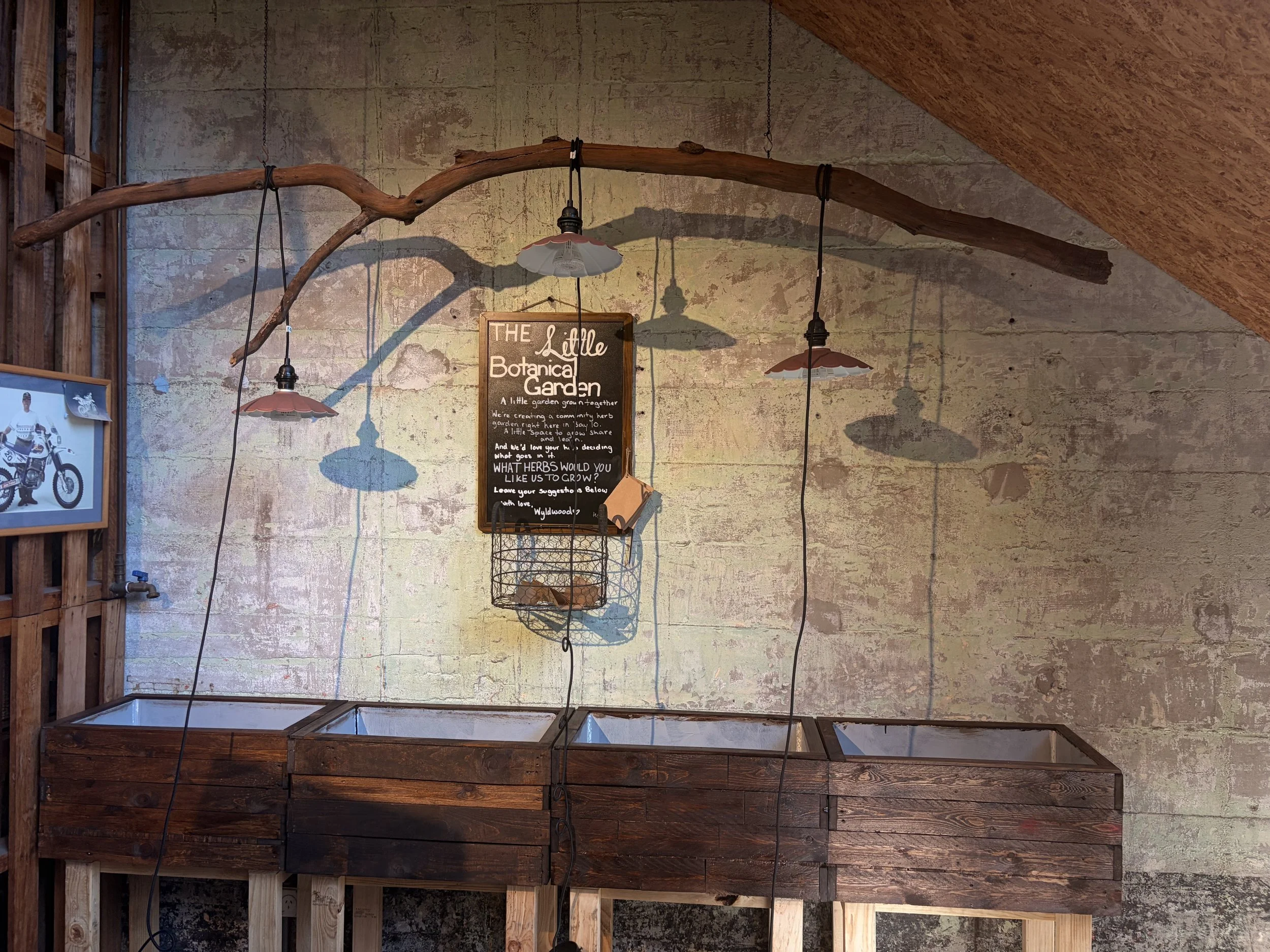
That little garden I discovered all those years ago has become the inspiration behind our newest project at Wyldwood Collective.
Tucked into our corner of Bay Ten, we're creating a small indoor community herb garden.
A place where people can access fresh herbs, learn a little about growing food, exchange knowledge, and contribute to something that belongs to the wider community.
The intention is deliberately simple.
We want people to be able to take a little of what they need, leave plenty for the next person, and contribute in whatever way they can.
There will be no membership fees, no exclusive plots, and no expectation that participation needs to look a particular way.
Just a small, shared growing space built around generosity, curiosity and mutual respect.
And while the garden itself is still taking shape, we've been approaching its construction with the same philosophy.
Building With What We Already Have
Sustainability is often discussed in terms of what we purchase.
Which products are environmentally friendly? Which materials can be recycled? What should we replace with something supposedly better?
But one of the most useful questions we can ask is whether we really need something new in the first place.
Looking back, there's something rather fitting about the fact that the garden which inspired this project was planted in old concrete laundry tubs.
Long before I understood much about sustainability or circular design, someone had shown me how discarded materials could become something useful, beautiful and generous.
In many ways, we're simply continuing that idea here at Bay Ten, using salvaged timber, repurposed materials and a little ingenuity to create something that can be shared.
For the Little Botanical Garden, we've been making a conscious effort to work with reclaimed materials wherever practical, giving existing resources a new purpose rather than immediately purchasing replacements.
A Second Life for Salvaged Pallets……again!
The planter boxes have been clad in salvaged pallet timber.
Rather than allowing usable wood to become waste, we've repurposed it into the exterior of the garden's growing containers.
The result is something wonderfully imperfect.
Variations in colour, grain and texture tell the story of materials that have already lived another life.
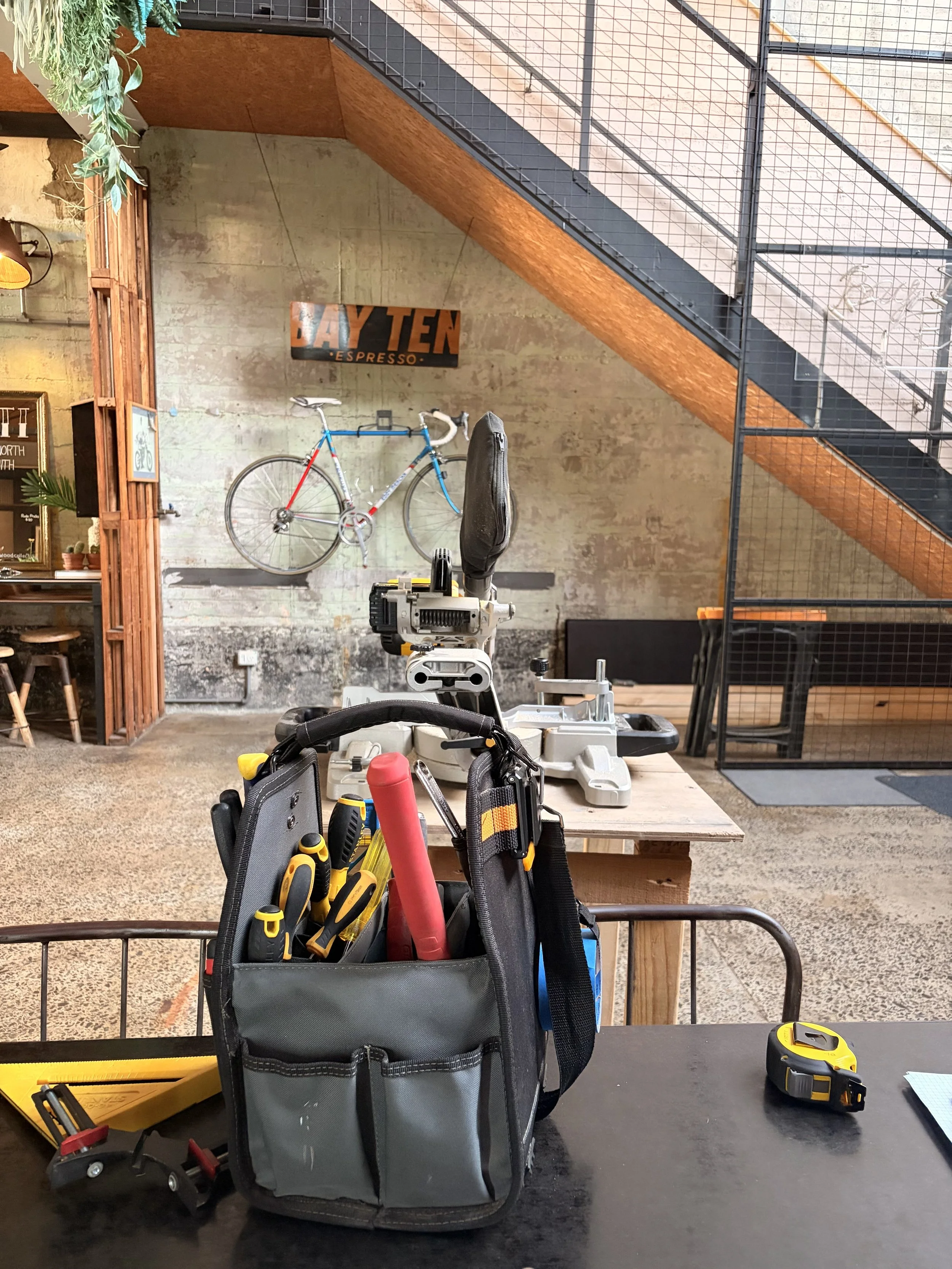
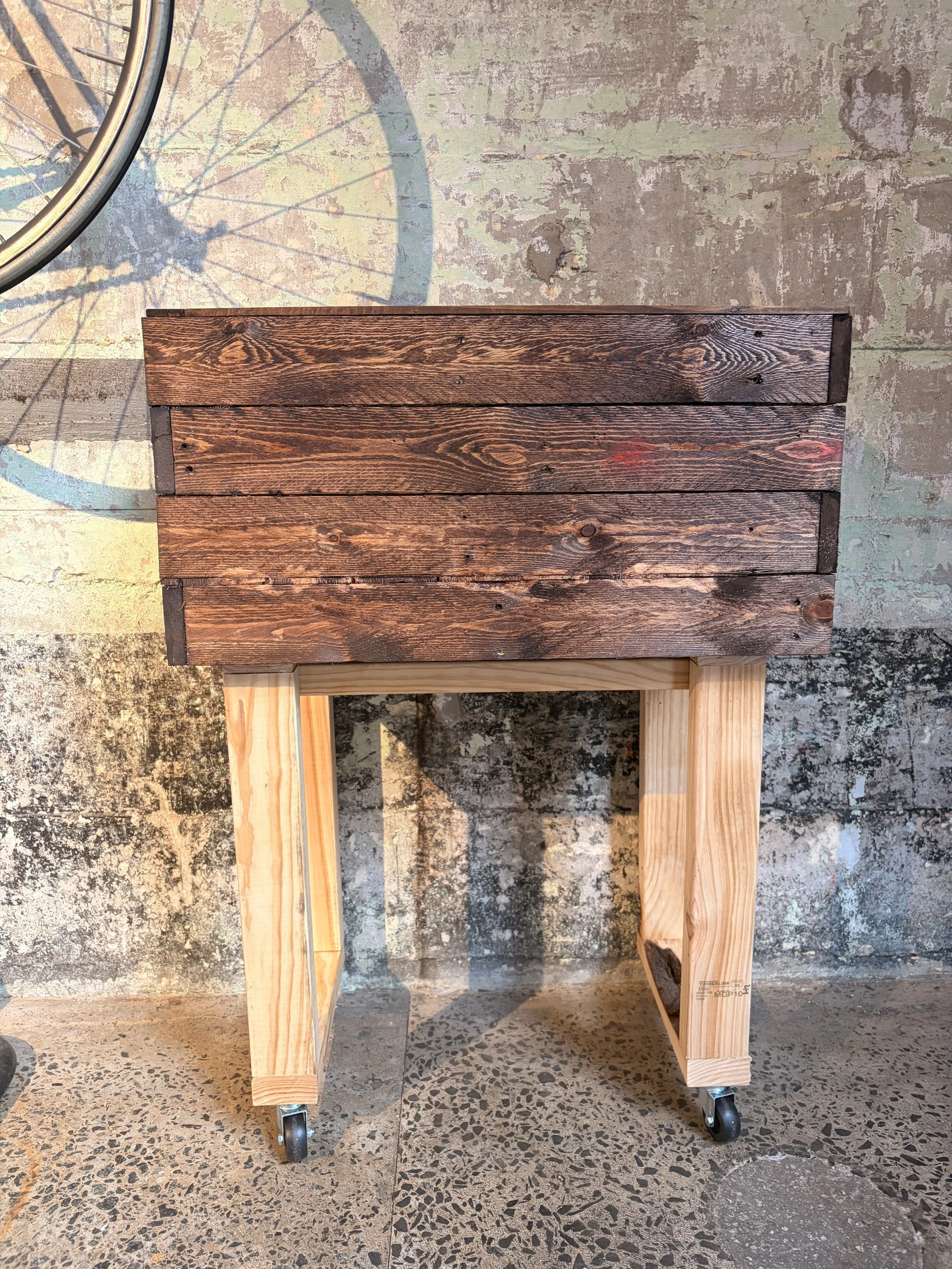
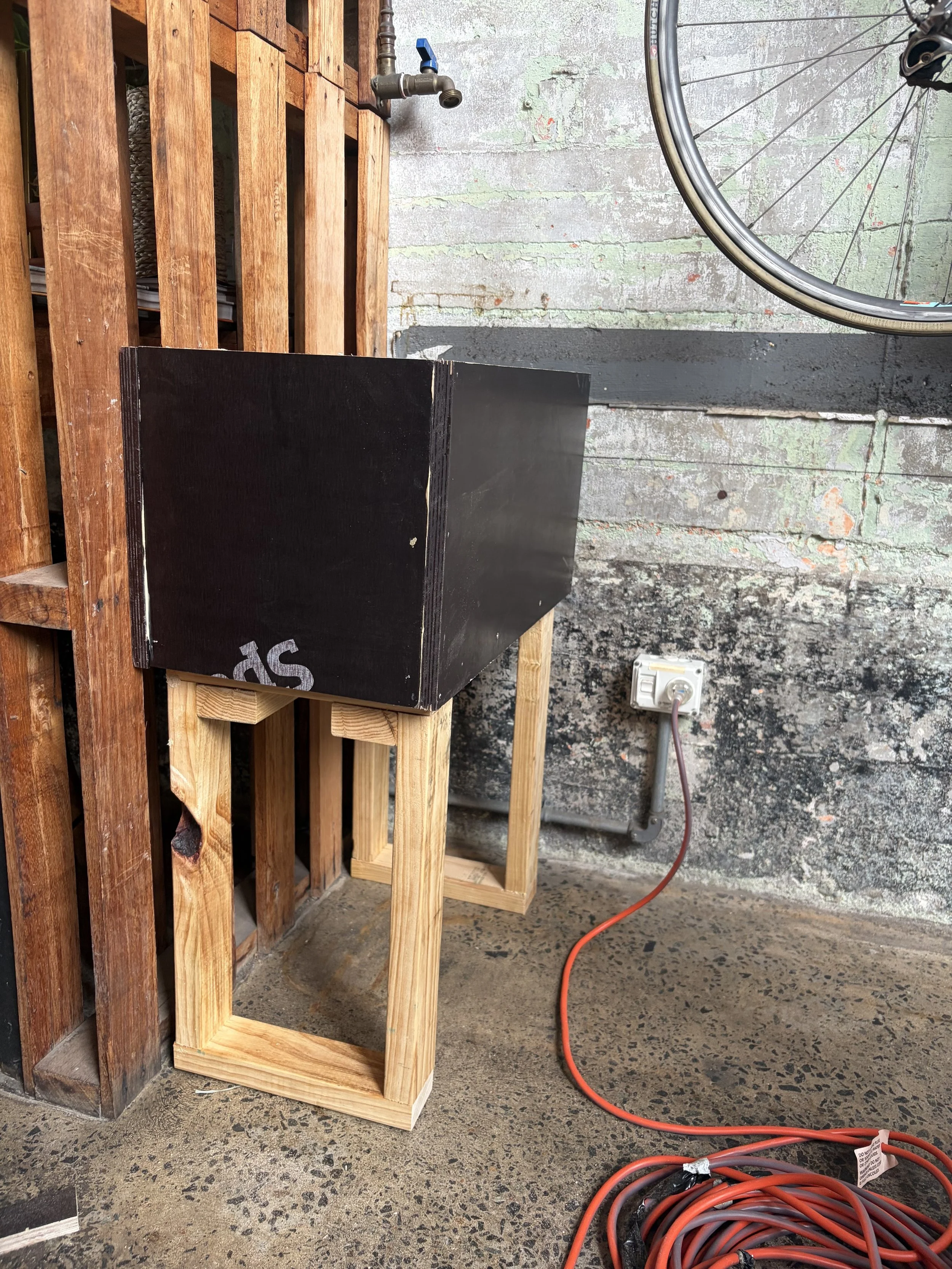
There's a certain charm in that, but there's also a practical philosophy behind it.
Not everything needs to be new to be useful, functional or beautiful.
By choosing reclaimed materials, we're making use of resources already in circulation while creating something designed to serve a completely different purpose.
A Branch With a New Purpose
One of our favourite details is the branch that will support the garden's growing lights.
Rather than purchasing a conventional lighting frame, we've salvaged a branch, dried it and treated it in-house in preparation for its new role.
What might otherwise have been discarded is becoming a functional part of the growing system.
The branch brings an organic, slightly sculptural quality to the space, creating a visual connection between the technology required for indoor growing and the natural forms we're trying to nurture.
It's a small detail, but one that feels particularly fitting.
Even when we're growing food indoors, there's no reason the structures supporting it need to feel entirely removed from nature.
Designed to Change and Grow
Perhaps the most important consideration in the garden's construction has been flexibility.
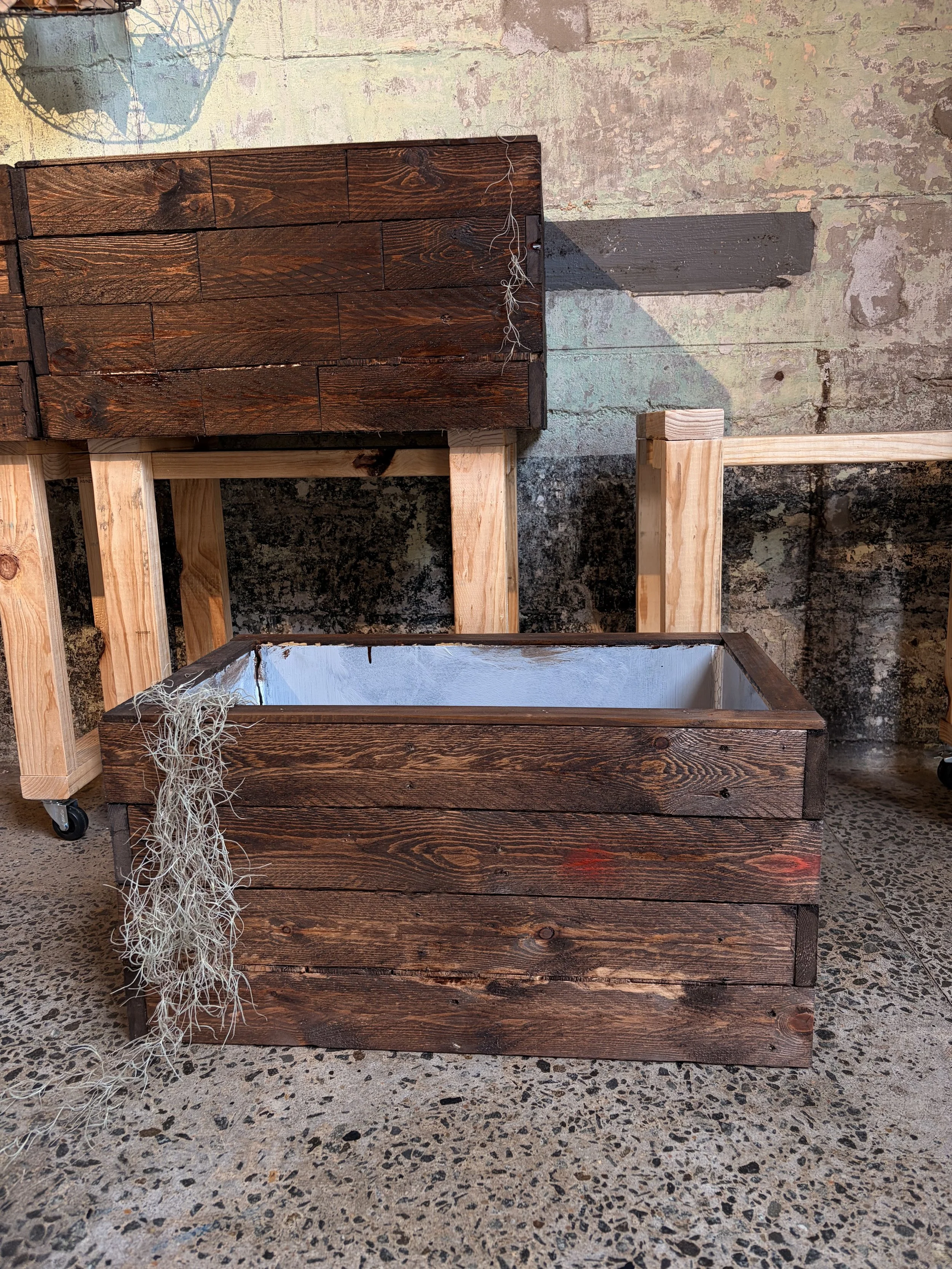
Each planter box has been designed to function either on its rolling stand or independently without its base.
This modular approach means we can rearrange the garden as needed, move individual planters, expand the growing area or reduce its footprint depending on how the space is being used.
Rather than building something fixed and expecting the community to adapt around it, we've tried to create a garden that can adapt alongside the community.
If one herb proves particularly popular, we can make room for more.
If our growing needs change with the seasons, the layout can change too.
And if the garden grows beyond what we initially imagined, we have the ability to add to it without starting again.
The intention isn't to build a finished object. It's to create something capable of evolving.
That adaptability is an important part of sustainability, too.
Objects that can be repaired, repurposed, reconfigured and extended are less likely to become obsolete simply because our needs change.
Growing Food in Small Spaces
One of the things we're particularly excited to demonstrate is just how much can be achieved in a relatively compact space.
Indoor food growing comes with its own challenges, especially when it comes to lighting, airflow, water and plant selection.
That's why our garden is being designed around dedicated grow lighting and a growing environment suited to the herbs we eventually select.
We don't expect every experiment to be successful.
Some plants will thrive. Others might struggle. We'll undoubtedly learn a few things the hard way.
But that's part of the point.
Gardening is a process of observation, experimentation and adaptation, and we'd love for the wider community to be part of that process.
By documenting what works, what doesn't and what we learn along the way, we hope the garden might encourage others to experiment with growing food in their own homes.
Even if all they have is a little space on a windowsill.
Taking the Garden Beyond Bay Ten
Of course, the idea of a community garden shouldn't have to stop at the garden itself.
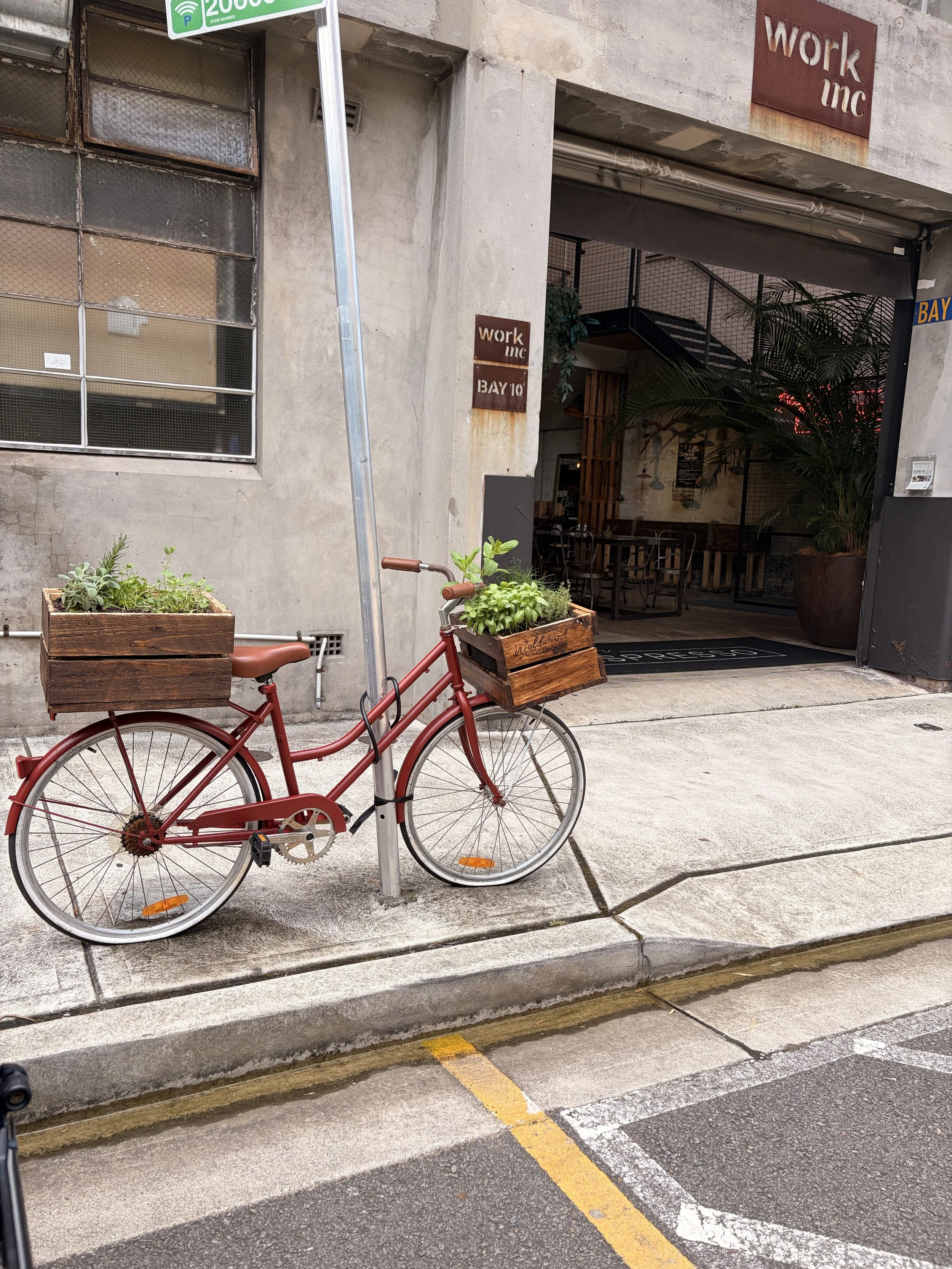
After all, the little herb garden that inspired this entire project wasn't tucked away behind a gate. It was growing right along someone's front fence, accessible to anyone who happened to wander past.
And we'd like to bring a little of that same spirit back to the street.
Alongside our indoor growing space, we're introducing a collection of smaller herb planters nestled onto a bicycle stationed outside in the laneway.
These little planters are home to some familiar culinary favourites. The sorts of herbs we reach for when making dinner, preparing a Sunday roast, or adding a little something fresh to a meal.
They're not quite ready for harvesting just yet, but they're growing, and it won't be long before they're ready to share.
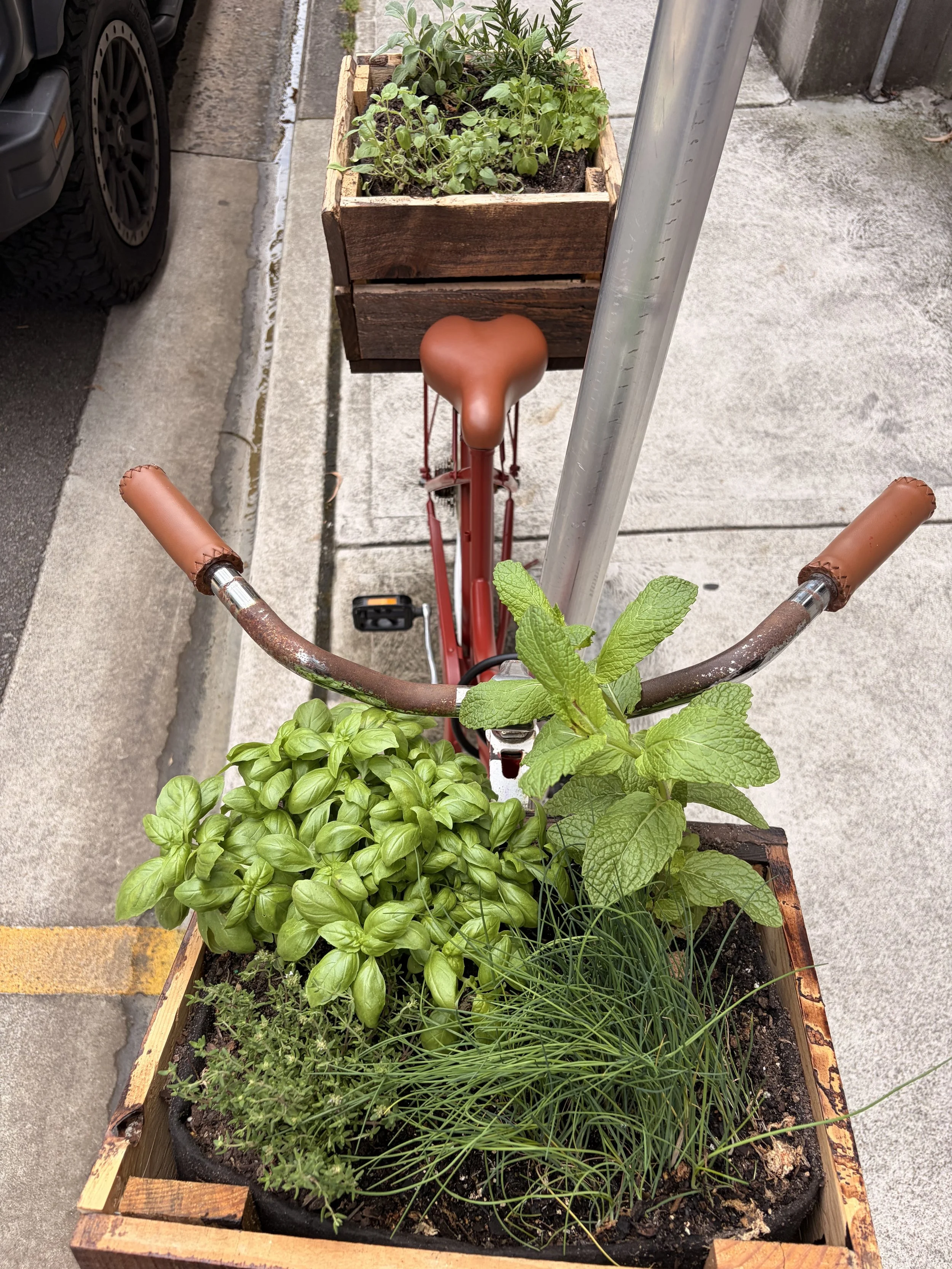
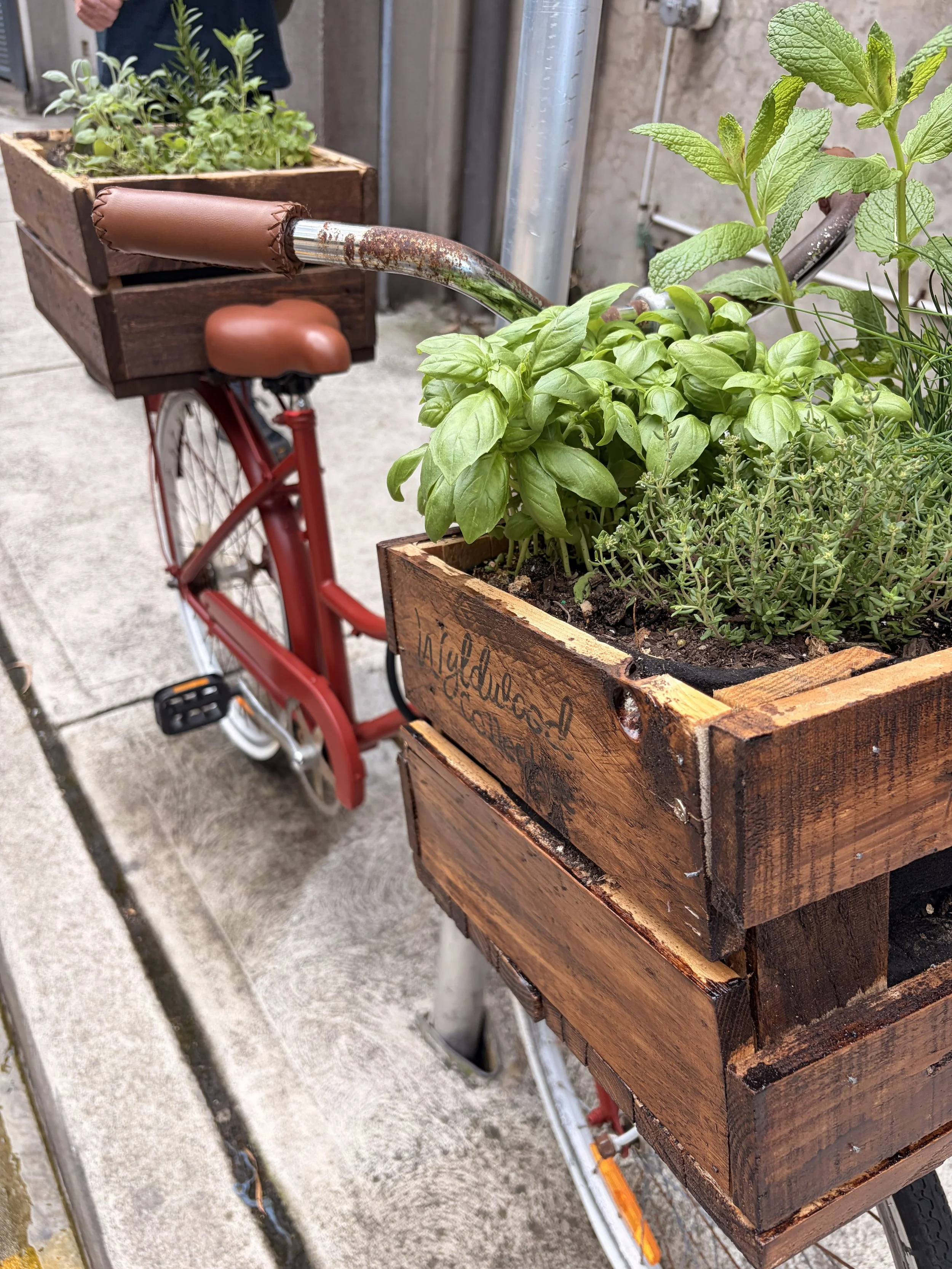
The idea is to make fresh herbs accessible in the places people already move through, without needing to seek out a dedicated garden or make a special trip.
A little rosemary on your way home. A few leaves for dinner. Something fresh growing amongst the concrete.
And perhaps, eventually, a few more little gardens appearing in unexpected places.
Because if there's one thing that original garden taught me, it's that you don't need much space to make a meaningful difference.
Sometimes all you need is a little patch of growing space and a willingness to share.
A Garden Shaped by Its Community
While the planter boxes are now built, we're still preparing the growing environment and sourcing the herbs that will eventually fill them.
And this is where we'd love your help.
Rather than deciding everything ourselves, we're inviting the Bay Ten community to help shape what grows here.
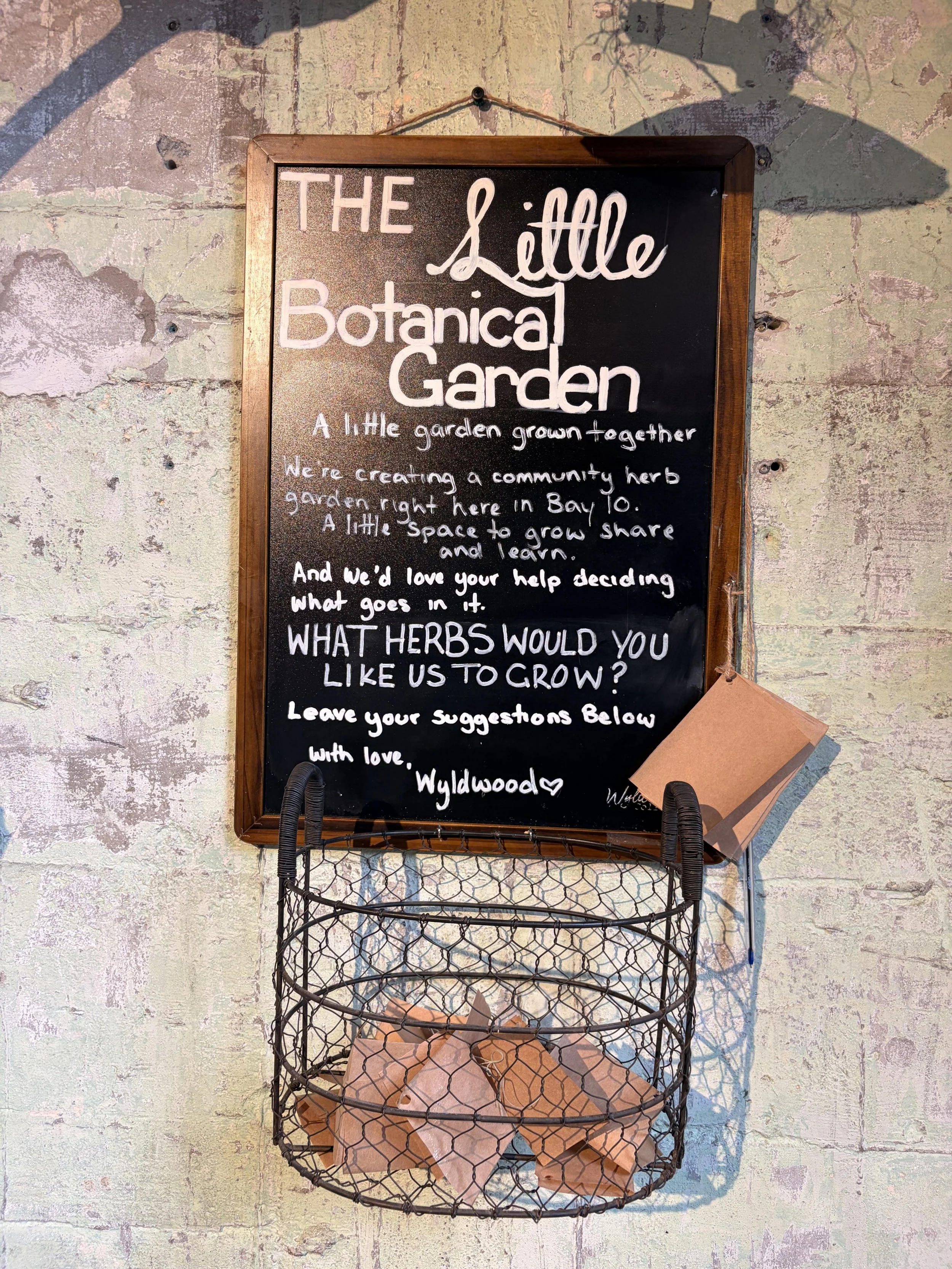
What herbs do you use most often?
What would you love to have access to without purchasing an entire bunch?
Is there something you've always wanted to try growing?
Perhaps you have a favourite recipe, a growing tip passed down through your family, or a cutting you'd like to contribute once the garden is ready.
We'd love to hear it.
Our little chalkboard is now up at Bay Ten, ready for planting requests, ideas and suggestions.
You can also share your thoughts with us through Instagram or simply stop by for a chat.
As the garden develops, we'll continue sharing the process, from construction and planting through to our first harvests.
Because the most meaningful part of this project won't be what we build.
It will be what happens when people begin to use it.
A Little Garden, Grown Together
I often think about that herb garden I stumbled across all those years ago.
I wonder whether the person who planted it ever considered what it might mean to someone passing by.
Whether they knew it could make an unfamiliar neighbourhood feel welcoming, help a struggling student find a different relationship with food, or leave an impression that would last for years.
Probably not.
And perhaps that's what makes it so special.
We don't always get to see the impact of the small things we do for one another.
Sometimes we simply plant something, offer it freely, and trust that somebody else might find value in it.
That's what we're hoping to do here.
Not solve food insecurity with a few planter boxes, or pretend that a handful of herbs can fix the problems of urban living.
Just create one small, accessible place where food, nature and community can meet.
A place that asks very little and offers what it can.
Because somebody once planted a few herbs outside their home, and without ever knowing it, changed mine.
Perhaps this little garden can do the same for someone else.
Follow Along as We Grow
Our little gardens are only just beginning, and we'd love for you to be part of what comes next.
Sign up for our garden updates to be the first to know when herbs are ready to harvest, what's growing in our planters, and where new little gardens might be popping up around the neighbourhood.
We'll also share what we're learning along the way, from growing food in small spaces to making the most of what we harvest.
A little garden news, delivered when there's something worth sharing.
Grow • Share • Learn
The Little Botanical Garden is an evolving community project at Bay Ten, supported by Wyldwood Collective.
Have a planting request or something you'd like to contribute? Visit us at Bay Ten in Milsons Point, leave a suggestion on our chalkboard, or share your ideas with us on Instagram.